
Depalletizing
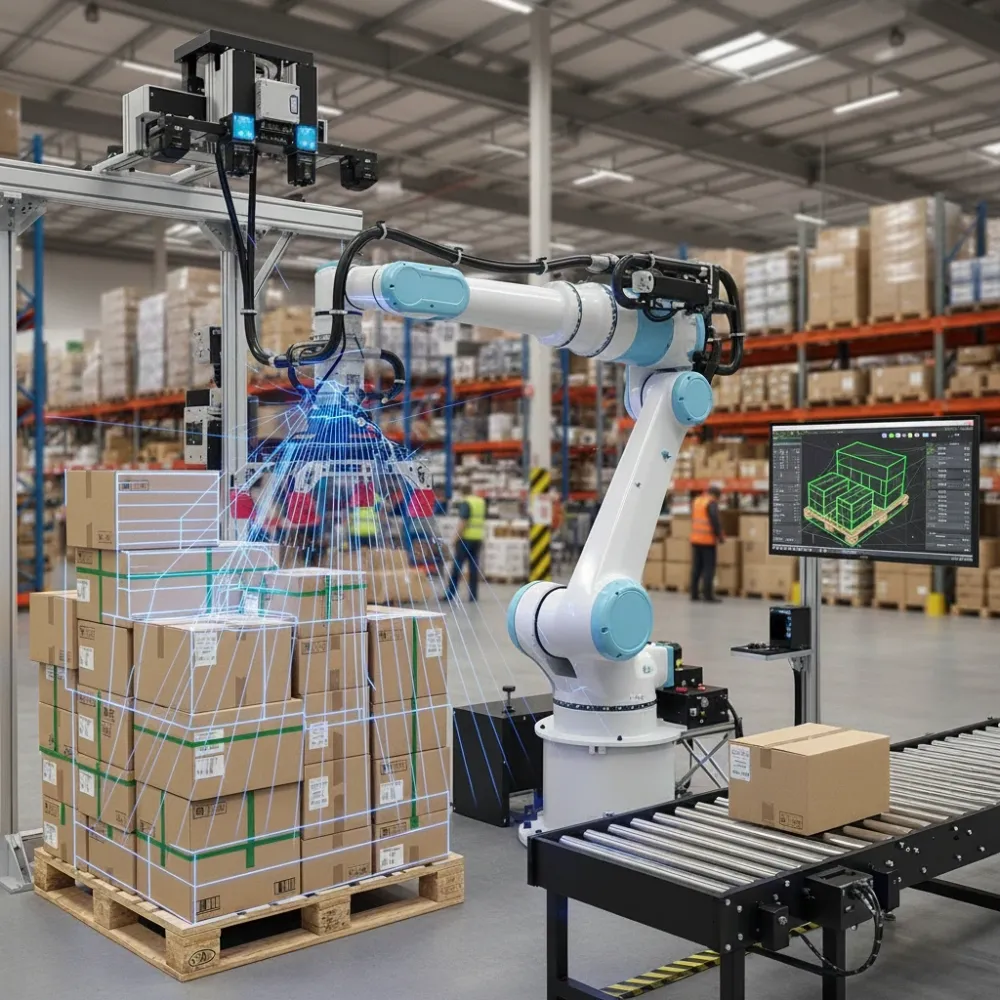
Unload a pallet. Describe the box, the pattern and the pallet, and the cell takes it down layer by layer to feed the line.
Depalletizing is the same job as palletizing, run backwards. The description that tells ThRiVer how to build a pallet also tells it how to take one apart: it works down through the pattern layer by layer, lifting each box off and setting it on the conveyor or into the next station. Same cell, same setup, the other direction.
The same cell running in reverse, taking a loaded pallet down box by box.
How ThRiVer runs it.



What it delivers.
How it handles the hard cases.
A demo runs once. Production runs all shift. ThRiVer is built to keep going when an item is not where it should be.
The pallet type changes
A new box or a new layout is a new description, not a re-engineered cell, so a second pallet type is minutes of setup rather than a return visit.
The cell is shared
The same cell palletizes and depalletizes. Which one it does is a matter of which job you describe.
Every pick is logged
Result, cycle time and cause are recorded per box, so repeated trouble on one pallet type is visible.
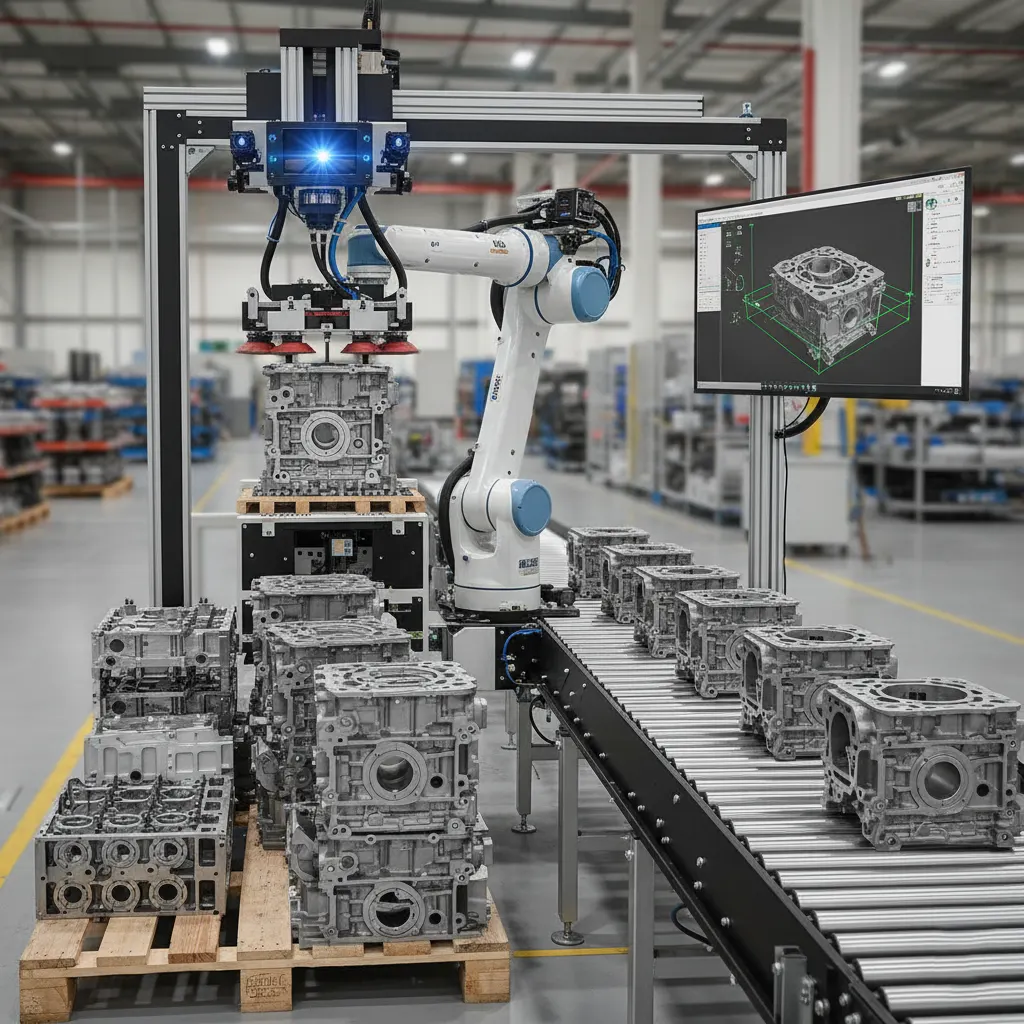
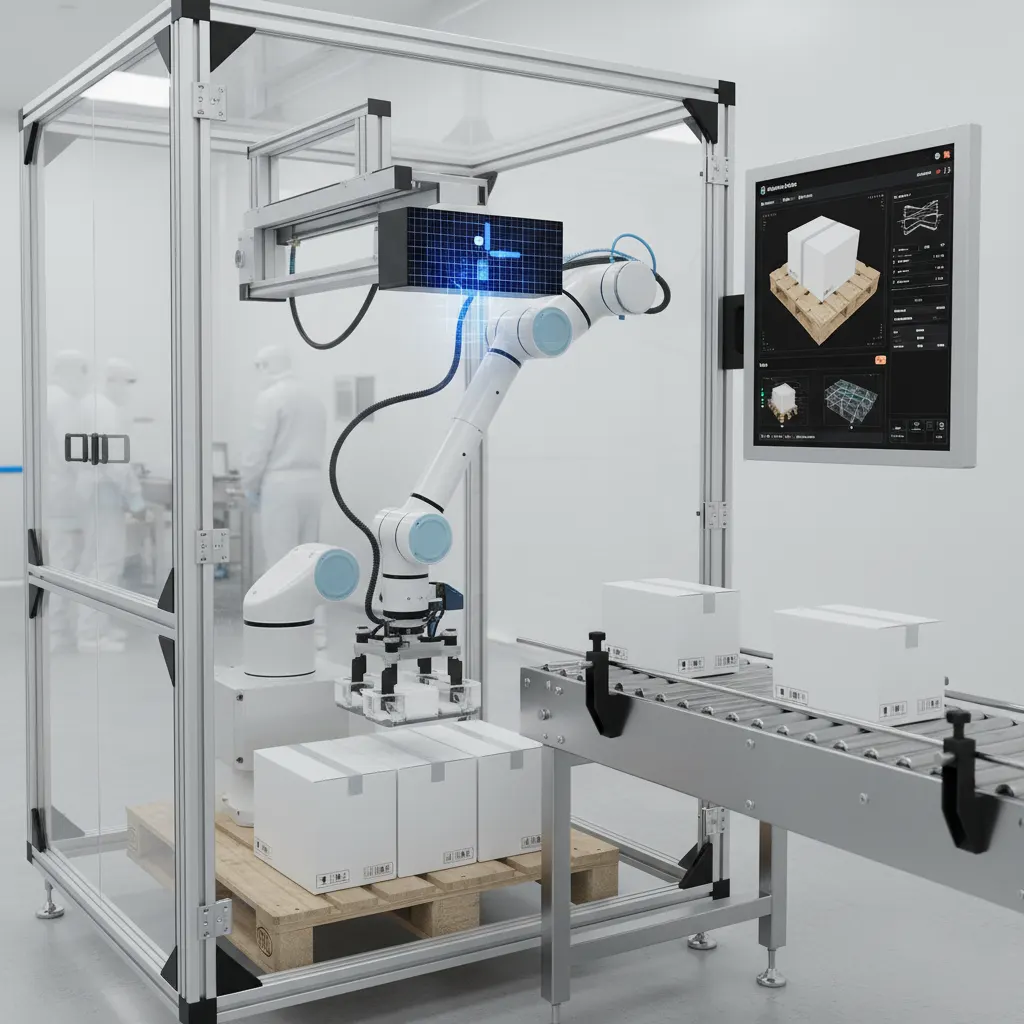
Built for production, across industries.
The same platform, set up by description, drops into very different lines.


Frequently asked questions
- What is robotic depalletizing?
- Robotic depalletizing is taking a loaded pallet apart, lifting boxes off layer by layer and feeding them to a conveyor or the next station. It is palletizing run backwards, and on ThRiVer it uses the same description and the same cell.
- Can the same cell palletize and depalletize?
- Yes. The description that tells ThRiVer how to build a pallet also tells it how to take one apart, so which job the cell does is a matter of which one you describe. No second cell and no separate integration.
- How fast is robotic depalletizing?
- Up to 900 cases per hour on a ThRiVer cell. Depalletizing is usually a little faster than palletizing because the placement is a simple hand-off rather than a position computed against a growing stack.