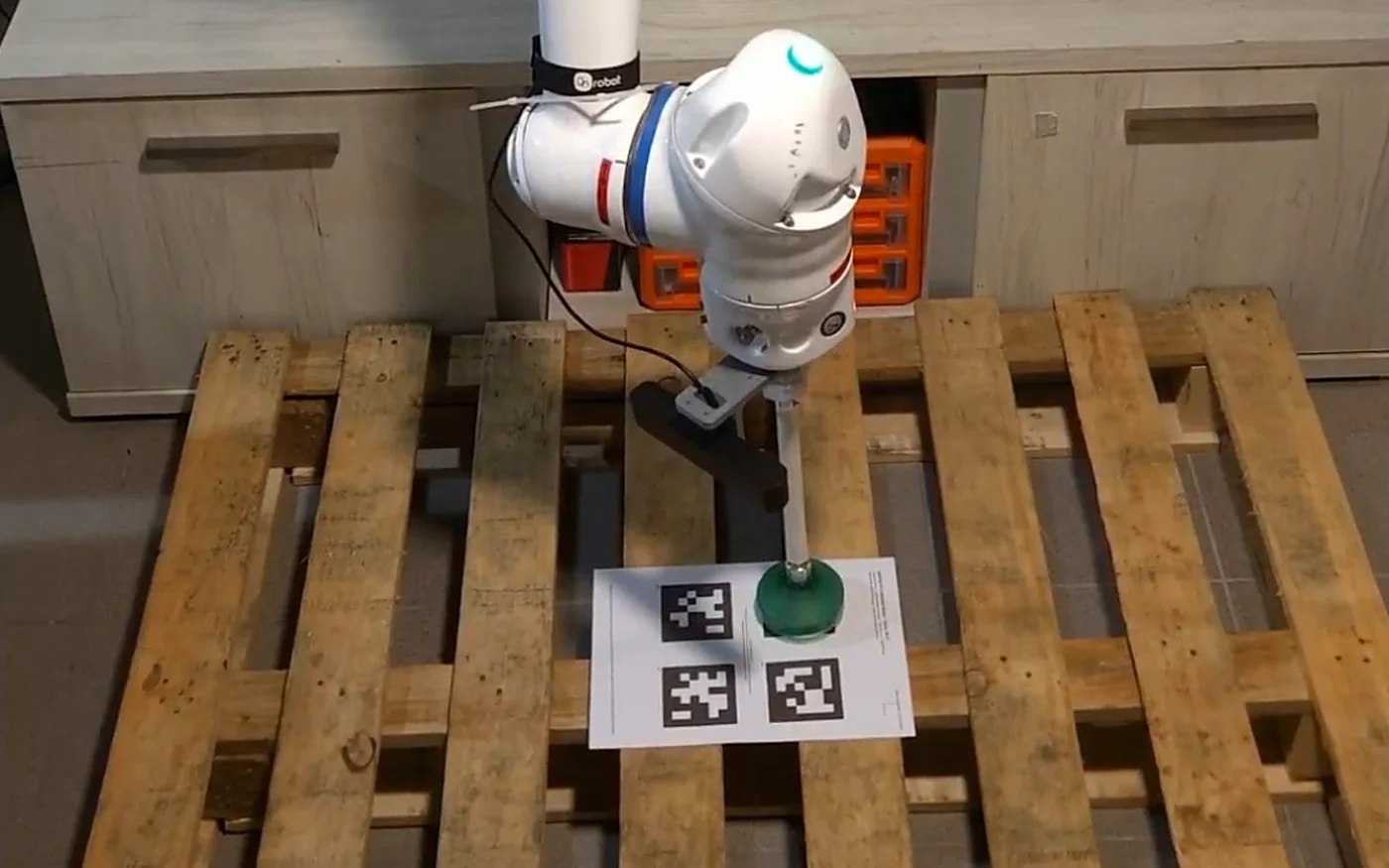
Most packing automation assumes the order never changes: same product, same box, same pattern, every time. Real orders are messier. The mix shifts, the box size changes, and the moment it does, a hard-coded packing program falls over and someone finishes the box by hand.
The job, not the recipe
A soft, sustainable product like a roll or a bag has no rigid shape to lock a pattern around, and orders come in different counts and carton sizes. So instead of a fixed recipe, the operator states the order: the item, how many, and the box. The cell works out how to fit that specific order into that specific box, then packs it, carton after carton.
Change the order and nothing needs reprogramming. You describe the next one and the cell adapts. That is the difference between automation that only handles one product and automation that handles your product range.
Why it holds up on the floor
Every carton comes out packed to a consistent standard, which is hard to keep up by hand across a full shift. Boxes get used more fully, and the people who were packing move to work that actually needs them. For variant-heavy lines, that flexibility is usually what makes the business case close, not raw speed.
The point is not that a robot packs a box. It is that it packs the box you actually have to ship today, without a specialist re-teaching it first.
Want to see it on your order mix? Book a demo and we will run your cartons.