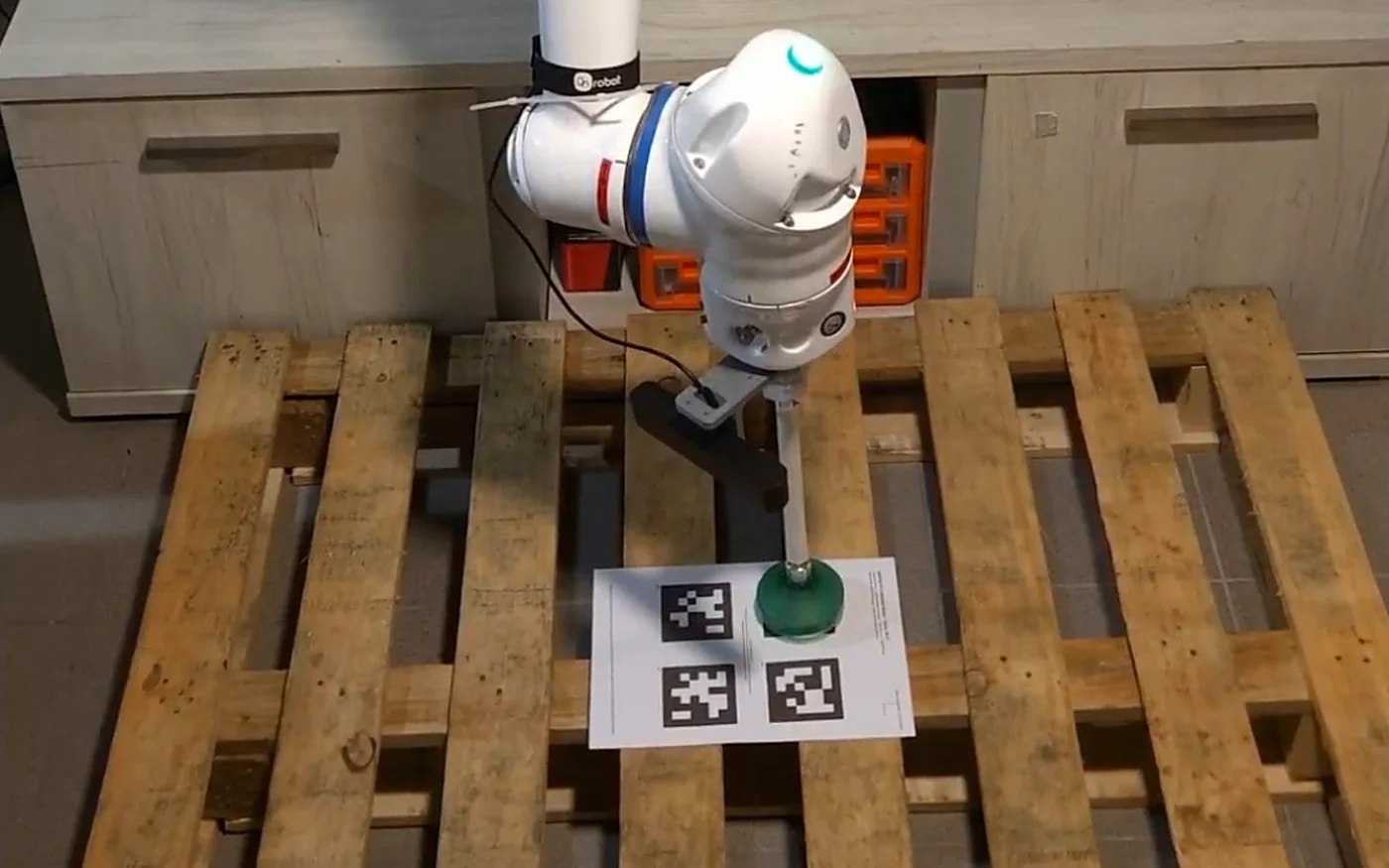
The slow, expensive part of automation has never been the robot. It is the setup: a specialist with a teach pendant, waypoint by waypoint, for weeks, and a repeat visit every time the job changes. That is what keeps automation out of reach for most smaller manufacturers.
You describe it, the cell plans it
Effecon’s approach flips that around. An operator describes the job in plain language: pick these parts from this bin and stack them here, or pack this order into that box. The system interprets the goal and composes the plan, the motions, the sequence, the checks, without anyone writing robot code.
Conversation is one way in, not the whole story. Underneath it is a cell that understands the goal rather than a fixed script, so it can handle parts it has not seen before and recover when something is off, instead of stopping and waiting for an engineer.
Why it matters for the line
Setup drops from a specialist project to something the people who run the line can do. Changing the job is a new description, not a re-teaching visit. And because the same platform runs across different tasks and robot brands, what you learn on one cell carries to the next.
That is the wedge: the hard part of physical AI, understanding a job and turning it into reliable motion, running when you press start, spoken to in words your team already uses.
Curious how it would fit your line? Book a demo and we will set up a job live.