
Hand-eye calibration is the step that tells a robot how its camera and its arm relate in space — the transform that turns “the camera sees a part here” into “the arm moves there”. Every vision-guided cell needs it before it can run, and again whenever the camera or the arm is bumped, remounted, or replaced. Get it slightly wrong and the robot picks with total confidence in the wrong place.
Ask anyone who has commissioned a vision-guided cell what they least look forward to, and this is the step that comes up.
Why hand-eye calibration is normally a manual job
The usual method is an engineer jogging the arm through a set of poses in front of a printed target and recording each one by eye. Three things follow from that:
- It takes skill. How good the result is depends on who did it and how patient they were.
- It takes the cell out of production for as long as it runs.
- It does not survive contact with a busy floor. Knock the camera mount a few millimetres and the cell starts picking off target until someone repeats the whole process.
That last one is the expensive part. It is unscheduled downtime, and it needs the one person on site who knows how.
What automatic hand-eye calibration looks like
We recently ran the same automated routine on a Fairino cobot and on a Yaskawa arm. Nobody jogged anything.
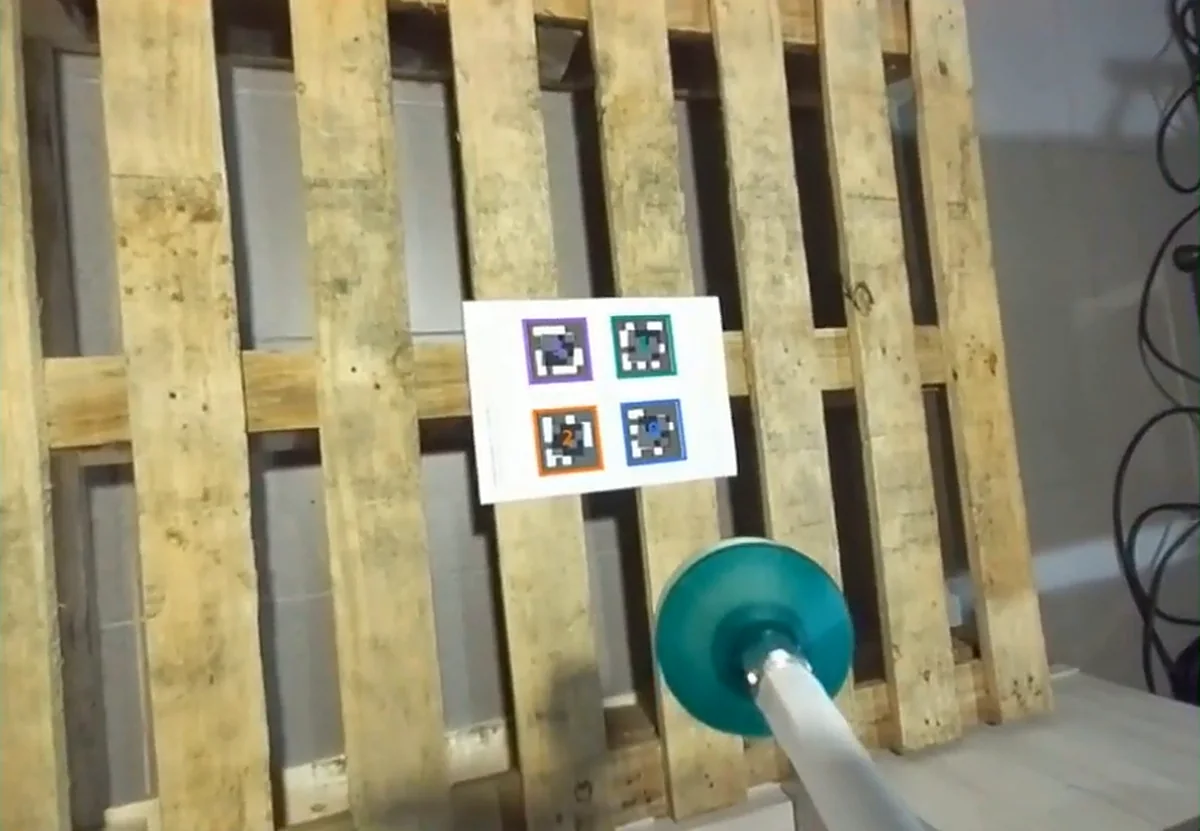
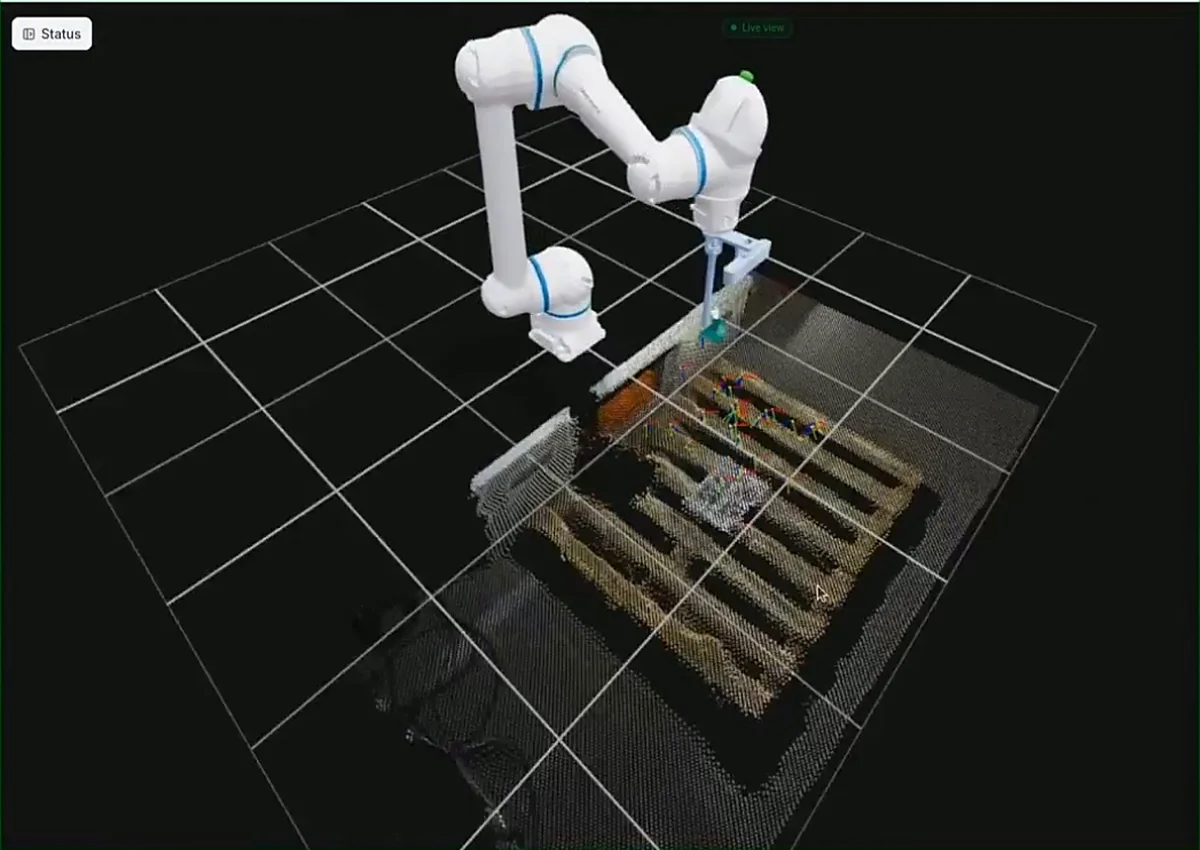
The arm moves itself through its own calibration poses while the camera watches a tag board placed in the workspace: a printed sheet of fiducial tags, laid flat on a pallet or stood upright in the cell, whichever the reach allows. From each pose the system detects the tags and solves the relationship between what the camera sees and where the arm actually is.
It checks its own work
A calibration that is quietly a few millimetres out does not announce itself. It shows up weeks later as mispicks nobody can explain.
So the routine verifies itself end to end. Once it has a solution, the arm touches each tag on the board with its tool tip. If a touch falls outside tolerance, it reruns rather than carrying the error forward. The check is against the physical world, not against the same numbers that produced the answer.
The same routine on any arm
Because ThRiVer is vendor-agnostic, the same routine runs on either arm with no per-cell integration work. Between the two runs, only the robot changed. The procedure, the tag board, and the tolerance check stayed exactly the same.
That matters beyond calibration. Per-cell integration work is where “one robot, one integrator, one program” gets locked in. Anything the platform does identically across arms is work you do once instead of once per cell.
Start it, and it finishes while you get on with something else.
Setup is the part worth automating
That is the pattern across the platform: describe the job, and it handles perception, planning, and control, including the setup work nobody wants to do manually. The robot has rarely been the slow part of automation. The commissioning around it is.
If calibration and setup time are holding your cells back, book a demo and we will run the flow on your own hardware.